Best Project Cost Tracking Software for Agencies (2026)
Share
"Looking for project cost tracking software that shows us exactly how much each project is costing versus what we budgeted." Agencies searching for this are usually already burned once: a project that looked fine on the timeline turned out to be losing money, and nobody caught it until the invoice was long gone. Project cost tracking software is built to close that specific gap. It keeps a project's actual cost next to its budget while the work is still running, broken down finely enough that you can see which task or which week pushed a project over, not just that it happened.
This guide compares the nine tools agencies and consultancies shortlist most often for this job in 2026. For each one: how it tracks cost specifically, where it falls short, and what it costs to run.
TL;DR
- Pike updates project cost against budget as time is logged, broken down by task and person.
- BigTime builds cost from real employee cost rates on every time entry, tied to accounting.
- Kantata breaks cost down to task and role level across large, multi-phase programs.
- Scoro tracks cost line by line against the original quoted estimate.
- Productive gives a simple budget-versus-actual view per task, without a heavy setup.
- Rocketlane builds a cost baseline from a signed SOW and flags variance with AI as work happens.
- Accelo uses AI to flag budget risk on a project before it becomes an overrun.
- Teamwork rolls up task and time cost but stays shallow on budget-line detail.
- Asana has no native cost tracking; it shows tasks and workload, not money.
See where each project's budget actually stands. Book a 15-minute walkthrough.
What project cost tracking software actually does
Project cost tracking software keeps a running total of what a project has actually cost, next to what it was budgeted to cost, while delivery is still happening. It pulls labour cost from logged time, adds expenses and any third-party spend, and compares the total against the budget line by line, usually broken down by task, phase, or team member so you can see exactly where the money went.
The problem it solves is timing and granularity. Most agencies can tell you a project's total budget at kickoff and its total cost after it closes. What they cannot usually answer mid-project is which specific piece of work is currently eating the margin. A project can look fine in aggregate while one workstream quietly runs three times over estimate, and by the time that shows up in a month-end report, the work is already done and the money already spent. Cost tracking software exists to surface that variance while there is still a decision to make. For how this connects to the wider profitability picture, see our guide to tracking project profitability for agencies.
What to look for in a project cost tracking tool
Live budget versus actual. The number should move as work happens, not refresh on a weekly export. If a project manager has to ask finance for a current cost figure, the tool is not doing its job.
Cost broken down below the project total. A single project-level cost figure hides where the problem is. Look for cost by task, by phase, or by person, so a variance points at a specific decision rather than the whole project.
Real cost rates, not a rough average. Cost should be calculated from each person's actual cost rate, not a single blended average applied to every hour. A blended rate can mask a project that is over budget specifically because senior people worked more of it than planned. See our guide to project budget tracking for agencies for how this plays out in practice.
Alerts before the overrun, not after. A useful tool flags a project approaching its budget threshold while there is still time to adjust scope or staffing, rather than reporting the overrun once it has already happened.
Accounting agreement. The cost figure the team sees should match the figure finance sees. Check whether the tool syncs with QuickBooks, Xero, or whatever system runs your books, so two teams are not quietly working from two different numbers.
Comparison table
Starting prices are the vendors' public list prices as of 2026. Where a vendor does not publish pricing, we show contact sales.
| Tool | Best for | Starting price | Core cost-tracking feature |
|---|---|---|---|
| Pike | Agencies tracking budget live | From $29/user/month | Live cost by task and person, updated as time is logged |
| BigTime | Billing-first firms under 50 | $20/person/month | Cost built from real employee rates on every time entry |
| Kantata | Large, multi-phase programs | Contact sales | Cost breakdown by task and role across complex programs |
| Scoro | Boutique consultancies | $19.90/user/month | Actual cost tracked line by line against the quote |
| Productive | Agencies under 100 people | $10/user/month | Simple budget-versus-actual view per task |
| Rocketlane | Enterprise implementation teams | $69/user/month | AI builds a cost baseline from the SOW and flags variance |
| Accelo | Client-services firms | Contact sales | AI flags budget risk before it becomes an overrun |
| Teamwork | Client-facing collaboration | $10.99/user/month | Task and time cost roll-up, shallow on budget-line detail |
| Asana | General workload visibility | $10.99/person/month annually | No native cost tracking |
1. Pike
Best for: agencies and consultancies that need a project's actual cost checked against its budget in real time, not at month-end.
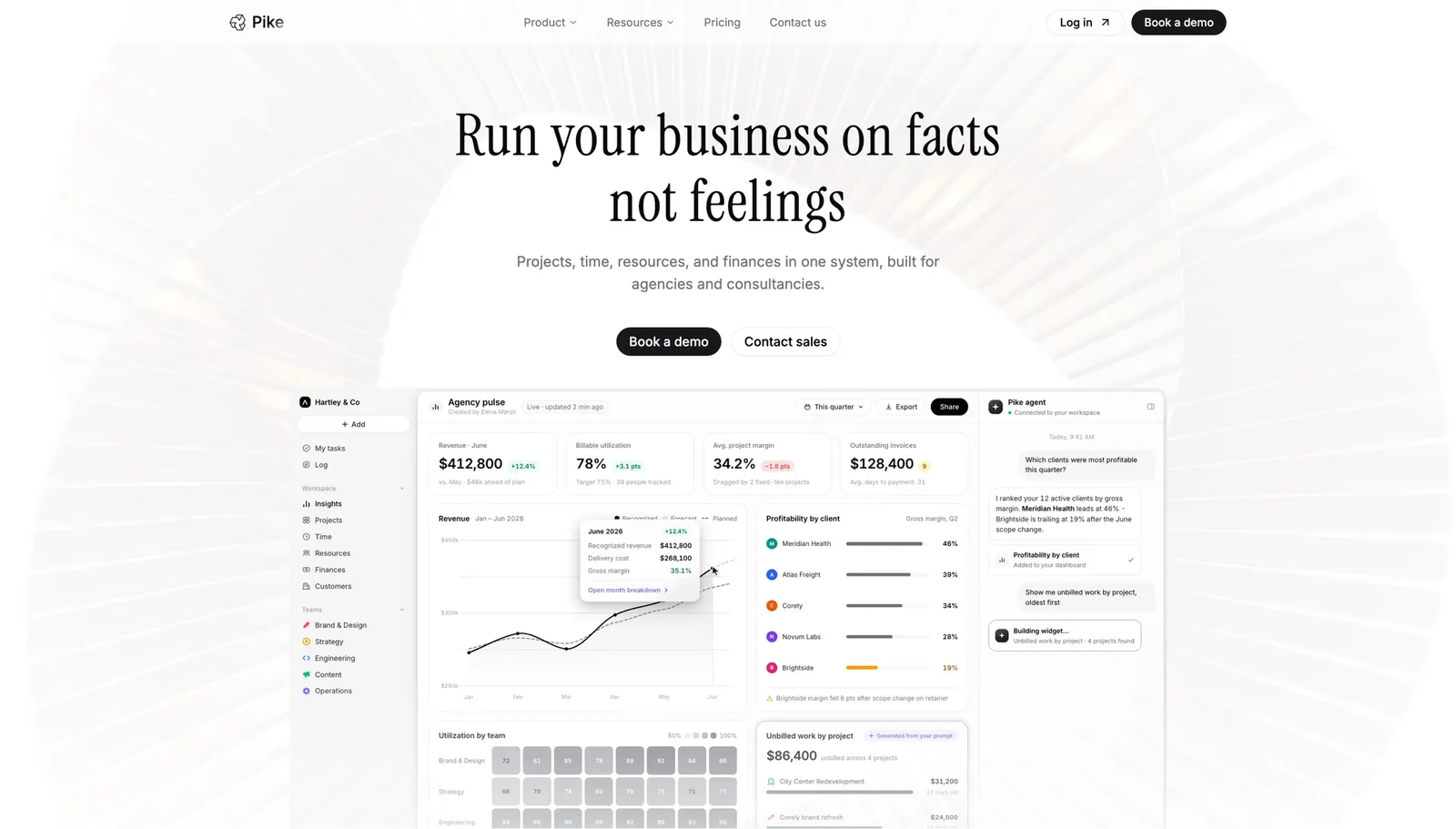
Pike updates a project's cost the moment time is logged against it. Cost is not one number for the whole project either: it breaks down by task, by phase, and by person, so if one part of the work is running hot you can see which one before it drags the rest of the budget down with it.
Because cost, billing, and budget live in the same system, the number a project manager sees is the same number finance sees. Pike ties cost to 4 native accounting integrations (QuickBooks, Xero, Business Central, and E-conomic), so a project's cost figure agrees with the company's books instead of requiring a separate reconciliation. It supports 4 billing models (fixed-price, time-and-materials, capped T&M, and retainer), which matters for cost tracking specifically because a fixed-price project and a T&M project need budget overrun flagged very differently. It is in production at teams including Outerkind, McElroy Architecture, e&enterprise, WPP, and Veolia.
Pros
- Cost updates as time is logged, broken down by task and person, not just a single project total.
- Real cost rates per person, not a blended average, so a variance points at what actually caused it.
- One system for delivery and finance means the cost figure never needs reconciling with the books.
Cons
- Workspace-wide budget forecasting sits on the Growth plan and above, not the entry Core tier.
- Firms outside professional services will not need its agency-specific cost model.
Pricing: Pike publishes plans starting at $29 per user per month (Core, billed annually; $35 monthly), with Growth at $49 and Scale at $99 per user per month, plus a custom Enterprise tier. See pricing or book a walkthrough.
2. BigTime
Best for: billing-first firms under 50 people that want cost built from real employee rates rather than an estimate.
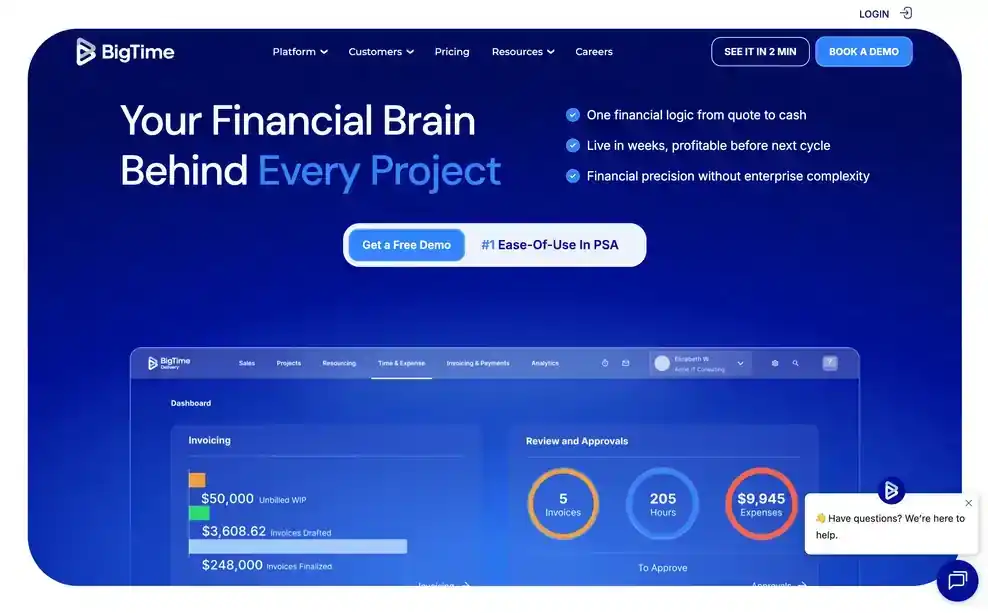
BigTime's cost tracking starts from the time entry, not the project total. As work is logged, BigTime applies each person's actual cost rate, so the project's running cost reflects who did the work, not a single average rate spread across the team. That matters most for firms where a handful of senior people cost meaningfully more than everyone else on the roster.
Pros
- Cost calculated from real per-person rates, not a blended average.
- Strong QuickBooks and Xero sync keeps project cost and payroll figures in agreement.
Cons
- Cross-project budget dashboards are thinner than dedicated project cost tools once you run more than a handful of projects at once.
- Resource-level forecasting weakens above roughly 50 people.
Pricing: from $20 per person per month.
3. Kantata
Best for: large professional services firms running complex, multi-phase programs with many cost centres.
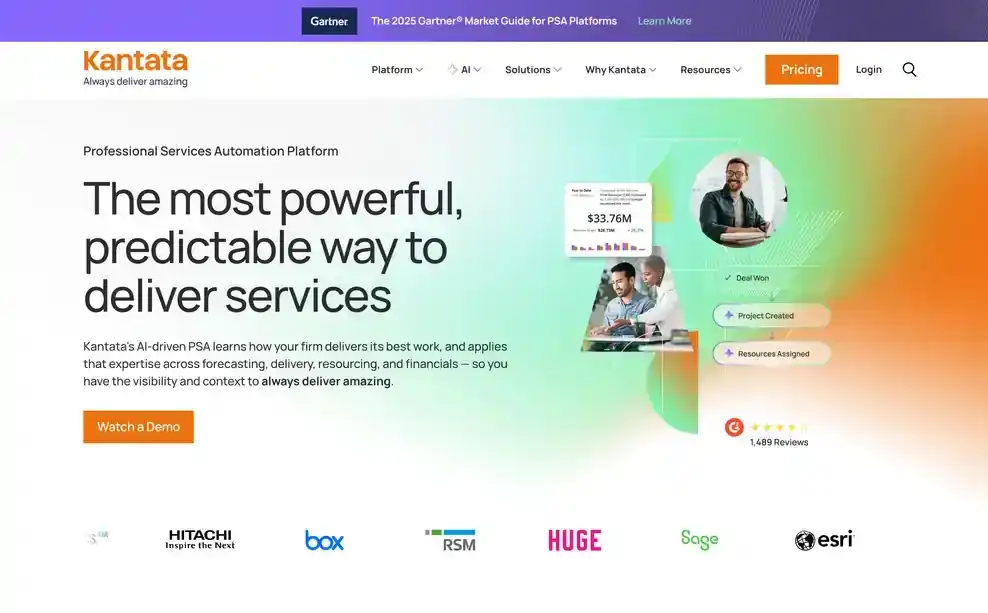
Kantata's cost tracking works at the level a large program actually needs: task and role, not just phase. For a firm running a multi-year engagement with dozens of workstreams, that granularity is what lets a program lead find the specific piece of work that pushed the budget, rather than being told the program overall is running hot.
Pros
- Cost breaks down to task and role level across large, multi-entity programs.
- Consolidated reporting suits firms tracking cost across subsidiaries or regions.
Cons
- Implementation runs six to twelve months, which delays when cost data is actually usable.
- That level of granularity is more than a firm under 150 people typically needs, and priced accordingly.
Pricing: Kantata does not publish standard pricing. Contact its sales team for a quote. See Kantata vs Pike.
4. Scoro
Best for: boutique consultancies that want cost tracked against the original quote, line by line.
Scoro ties cost tracking back to the estimate a project was quoted against. As labour and expenses accrue, Scoro compares them to the original quoted line items, so a variance shows up against the specific cost category, labour, materials, or expenses, that drifted from the plan rather than as one lump-sum difference.
Pros
- Cost variance shows up against specific quoted line items, not a single total.
- Estimation and cost tracking share the same platform, so nothing needs re-entering.
Cons
- The interface is dense, and new users typically take longer to get comfortable with it than expected.
- Cost reporting across many concurrent projects is less polished than Scoro's per-project view.
Pricing: from $19.90 per user per month. See Scoro vs Pike.
5. Productive
Best for: agencies under 100 people that want a simple budget-versus-actual view without a heavy rollout.
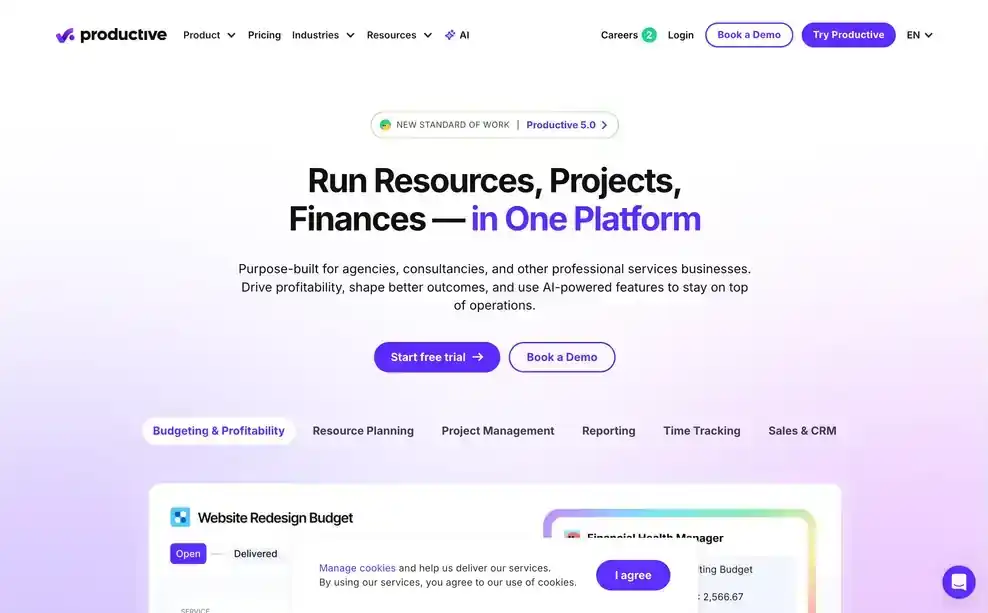
Productive keeps its cost view straightforward: budget against actual, broken down per task, in a fast interface that does not require weeks of setup before it is useful. For a 30-person design or content agency, that is usually enough granularity to catch a task running over before the whole project does.
Pros
- Fast to set up, with cost-per-task visible from day one.
- Budget-versus-actual is easy to read without training.
Cons
- Cost breakdowns stay fairly high-level once a firm's project portfolio grows past roughly 100 people.
- No native client-facing cost reporting, so client-side budget conversations still need a separate export.
Pricing: from $10 per user per month. See Productive vs Pike.
6. Rocketlane
Best for: enterprise implementation teams that want AI catching cost overruns rather than a person checking a dashboard.

Rocketlane's AI builds a cost baseline directly from a signed statement of work, then monitors actual cost against it as the project runs, flagging variance as it appears instead of waiting for someone to notice. For a large implementation team running many concurrent projects, that removes a step someone would otherwise do manually, project by project.
Pros
- AI sets the cost baseline from the SOW and watches for variance automatically.
- Fast implementation for an enterprise platform, at four to twelve weeks.
Cons
- Priced for enterprise; not a starting point for a 20-person agency.
- The automated baseline works best when the SOW is detailed; a loosely scoped contract gives the AI less to work from.
Pricing: from $69 per user per month.
7. Accelo
Best for: client-services firms that want budget risk flagged before it turns into an overrun.

Accelo's predictive tools look at a project's trajectory, not just its current total, and flag when a project is heading toward going over budget while there is still time to act. That is a different job than reporting cost after the fact: it is closer to an early-warning system than a ledger.
Pros
- AI-flagged risk warns before a budget overrun happens, not after.
- Cost data connects directly to the project's original quote and ongoing billing.
Cons
- Predictive alerts still need a human to review and decide what to do about them.
- Resource and portfolio-level cost reporting weakens above roughly 200 users.
Pricing: Accelo does not publish pricing. Contact its sales team for a quote. See Accelo vs Pike.
8. Teamwork
Best for: agencies where client collaboration matters more than granular cost detail.
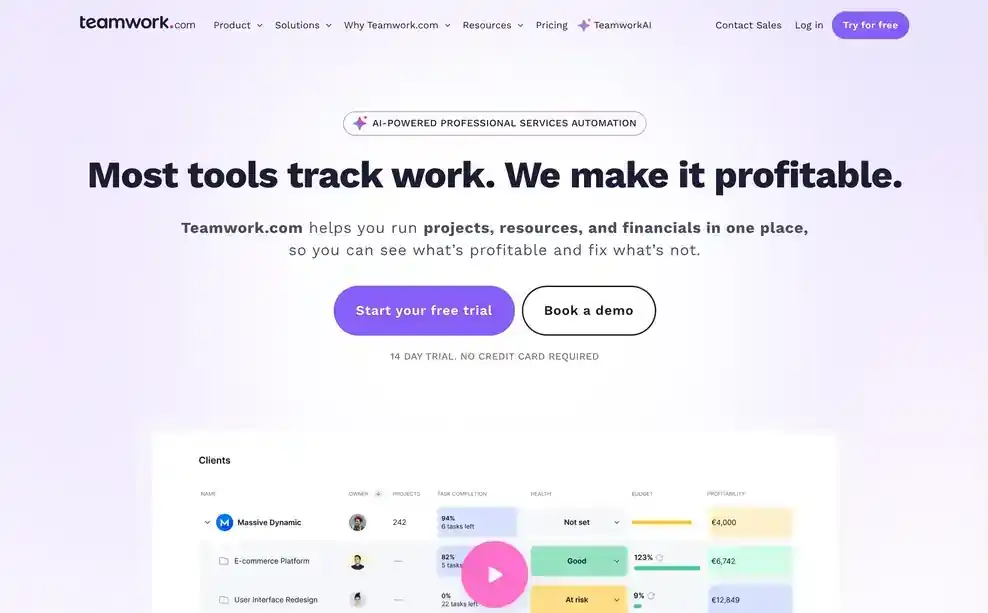
Teamwork rolls task and time data up into a project cost figure, but it stays shallow on the detail underneath. You can see that a project's cost is climbing; seeing exactly which task or team member drove it usually means exporting the data and building the breakdown somewhere else.
Pros
- Strong client portal alongside whatever cost data it does surface.
- Straightforward task and timeline management.
Cons
- Cost breakdown below the project total is limited, not a core strength.
- Teams doing real budget-variance analysis commonly export to a spreadsheet to get it.
Pricing: from $10.99 per user per month. See Teamwork vs Pike.
9. Asana
Best for: teams that need task and workload visibility more than dedicated cost tracking.
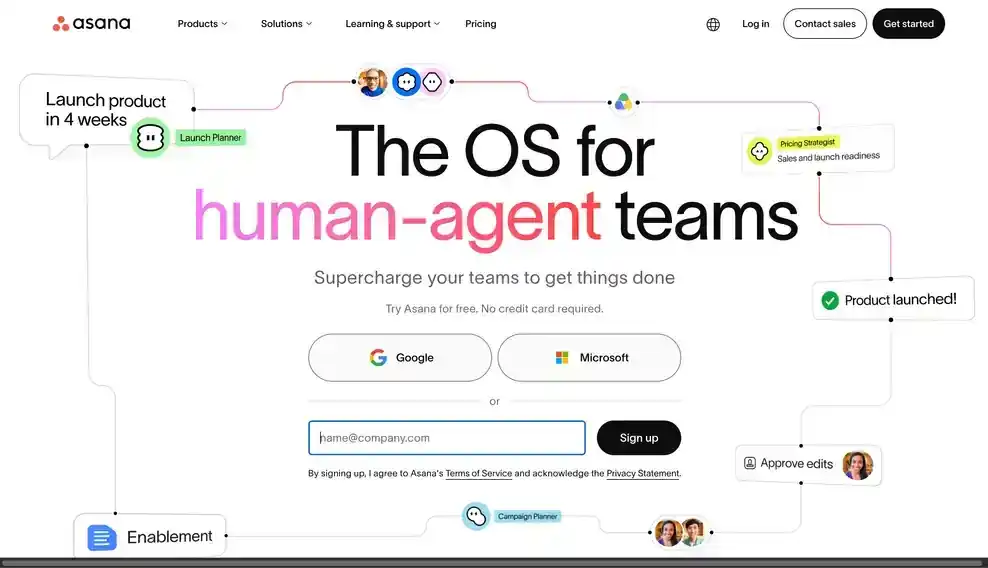
Asana does not track project cost natively. Custom fields can hold an hourly estimate or a budget number, but nothing calculates actual cost against it automatically, so firms using Asana for this usually pair it with a separate time tracking or billing tool and build the cost comparison by hand.
Pros
- Clear task and workload visibility across projects.
- Easy for cross-functional teams to adopt without training.
Cons
- No native cost or budget-versus-actual tracking.
- Building real cost visibility requires a second tool and manual reconciliation.
Pricing: plans with basic reporting start at $10.99 per person per month billed annually. See Asana vs Pike.
Which tool fits your firm
- Under 20 people, cost accuracy from real rates matters most. BigTime, if QuickBooks or Xero sync is the deciding factor.
- 20 to 100 people, want a simple view without setup. Productive, for budget-versus-actual per task with the lightest rollout.
- 30 to 150 people, need cost broken down by task and person live. Pike.
- Quote-driven boutique consultancies. Scoro, for cost tracked against the original line items.
- Enterprise implementation teams. Rocketlane, for AI-built baselines and automatic variance flags.
- Large, multi-phase programs across entities. Kantata, for task-and-role cost breakdowns at scale.
Why agencies choose Pike for cost tracking
Agencies choose Pike because a project's cost is never more than a few minutes stale. As time is logged, cost updates against budget, broken down by task and by person, so a manager can see exactly where a project is drifting while there is still room to adjust scope, staffing, or pace. Pike keeps finance data connected to resourcing, so the cost impact of a staffing decision shows up before you commit to it, not after the invoice goes out. For the metrics this connects to, see our project profitability guide.
See where each project's budget actually stands. Book a 15-minute walkthrough.
How we evaluated these tools
We assessed each platform against the five areas above: live budget versus actual, cost broken down below the project total, real cost rates versus blended averages, alerts before an overrun happens, and accounting agreement, along with fit for agencies and professional services firms specifically.
Public vendor pages supplied feature and pricing details. Where a vendor does not publish pricing, we marked it contact sales. Each tool's write-up names one real limitation, not just its strengths.
Frequently asked questions
Share