


Best project management software for marketing agencies
06 Oct 26
Share

"What's the best PSA software for digital agencies?" is a question that gets a different answer than the same question asked by a management consultancy or a creative studio. A digital agency runs dev, design, SEO, and paid media through the same team roster, often for a client roster that mixes retainers with one-off project fees, and the software has to hold all of that together without a spreadsheet reconciling it every Friday.
Professional services automation (PSA) software covers the same core ground for every agency: project delivery, resourcing, time tracking, and billing in one connected system. What changes for a digital agency is which of those matter most day to day. A campaign agency lives or dies by the content calendar. A digital agency lives or dies by whether a developer's hours on a client's website rebuild get billed correctly against a fixed quote, while a designer's hours that same week get billed against a monthly retainer.
This guide compares the nine PSA tools digital agencies shortlist most often in 2026, specifically for that mixed-discipline, mixed-billing reality. If you want the broader, vertical-agnostic version of this comparison, see our best PSA software for agencies and consultancies guide, which covers the same nine tools without the digital-agency framing.
See time across every discipline tied to project margin in one place. Book a 15-minute walkthrough.
A digital agency's PSA software has to answer a question a single-discipline shop rarely asks: is this project profitable once you account for a developer's hourly cost, a designer's hourly cost, and a strategist's hourly cost all landing on the same invoice. Generic project management software tracks the task list. It has no idea what a developer's time actually costs the business versus a junior designer's, and it has no native way to turn that mix into a client bill.
The second gap is billing variety. Most digital agencies run some mix of fixed-fee project work (a website rebuild, an app launch) and ongoing retainers (SEO, paid media management, ongoing dev support) at the same time, often for the same client. Software built around one billing model forces the other one into a workaround. For how the different models shift risk between agency and client, see our guide to agency billing models.
Time tracking that carries a real cost rate per person, not a flat average. A developer, a designer, and a strategist do not cost the same per hour. If the software can't reflect that, project margin numbers are wrong before you even start.
Support for mixed billing on the same client. Look for software that runs fixed-fee, time-and-materials, and retainer billing natively, since a single digital-agency client often touches more than one of them across a year.
Resourcing across disciplines, not just one team. A dev sprint and a design sprint often run in parallel against the same deadline. The tool needs to show whether the people on both are over-committed, not just the people on one.
Real-time project margin, not a month-end report. By the time a fixed-fee web build shows as unprofitable in a monthly report, the project is usually already delivered. Margin visibility needs to update as time gets logged.
A proposal-to-delivery path that matches how digital agencies sell. Digital agencies pitch frequently, for both new project work and retainer renewals. Software that carries a quote into delivery without re-entry saves a genuine amount of admin time across a busy pipeline.
Starting prices are the vendors' public list prices as of 2026. Where a vendor does not publish pricing, we show contact sales.
| Tool | Best for | Starting price | Core PSA feature for digital agencies |
|---|---|---|---|
| Pike | Mixed dev, design, and marketing delivery | From $29/user/month | Time across disciplines ties straight to project margin, 4 billing models |
| Kantata | Large, multi-practice digital agencies | Contact sales | Skill-based staffing across dev and design tied to project accounting |
| Scoro | Fixed-scope web and app builds | $19.90/user/month | Cost traced line by line back to the original quote |
| Productive | Digital shops under 100 people | $10/user/month | Fast, low-setup path from logged time to invoice |
| Accelo | Proposal-heavy digital agencies | Contact sales | Quote-to-invoice runs as one connected workflow |
| Teamwork | Client-facing build and campaign work | $10.99/user/month | Client portal plus 150+ integrations |
| Rocketlane | Repeatable implementation or launch work | $69/user/month | AI drafts a staffed kickoff plan from a signed SOW |
| BigTime | Finance-first digital agencies | $20/person/month | Utilization and invoicing built on real per-discipline cost rates |
| Asana | General task and calendar tracking | $10.99/person/month annually | No native billing or per-discipline cost rates |
Best for: digital agencies running dev, design, and marketing work for the same clients who need time across all three to tie directly to project margin.
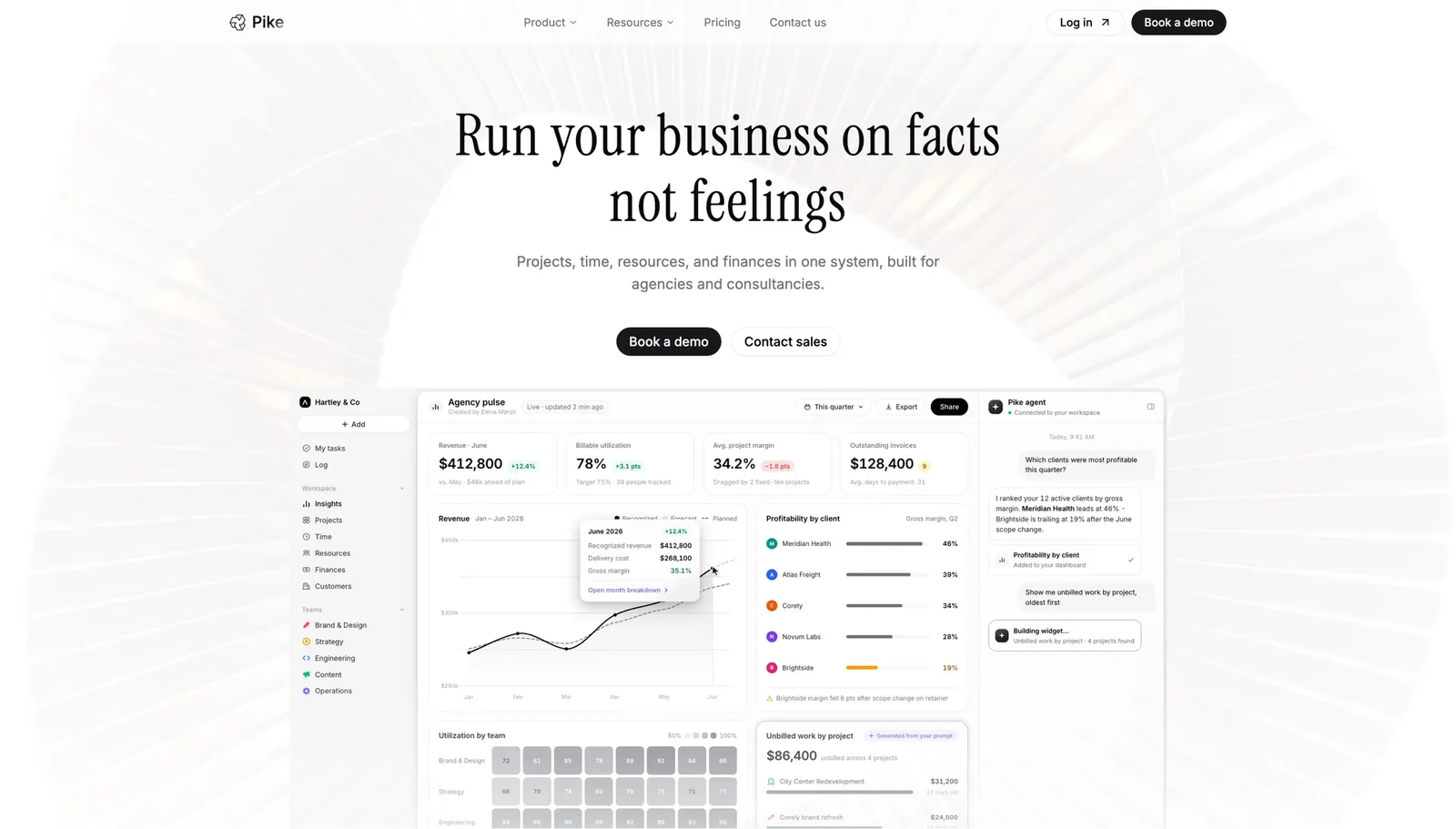
Pike tracks time per person against their real cost rate, so a project blending a senior developer's hours with a junior designer's hours shows accurate margin as the work happens, not an average that hides which discipline is actually eating the budget. Because a single client can carry a fixed-fee build and a monthly retainer at once, Pike runs 4 billing models (fixed-price, time-and-materials, capped T&M, and retainer) side by side without forcing one client onto one invoice type. It's in production at teams including Outerkind, McElroy Architecture, e&enterprise, WPP, and Veolia.
Pros
Cons
Pricing: Pike publishes plans starting at $29 per user per month (Core, billed annually; $35 monthly), with Growth at $49 and Scale at $99 per user per month, plus a custom Enterprise tier. See pricing or book a walkthrough.
Best for: large digital agencies running multiple practices (dev, design, strategy) that need to staff by skill across all of them.
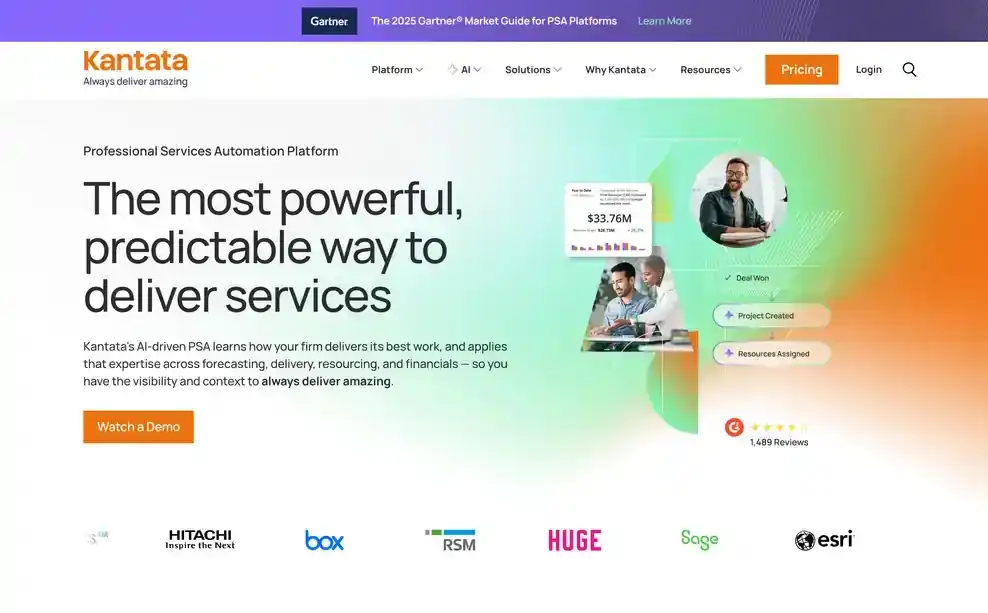
Kantata matches people to work by role and skill rather than just by open hours, which fits a digital agency organized into separate practices where a project needs a specific mix of developer, designer, and strategist availability at once. Staffing changes flow directly into project accounting, so a resourcing decision shows its budget impact immediately.
Pros
Cons
Pricing: Kantata does not publish standard pricing. Contact its sales team for a custom quote. See Kantata vs Pike.
Best for: digital agencies scoping a website or app build against a fixed quote and wanting every cost traced back to it.
Scoro ties a project to the quote it was sold against, then checks logged time and expenses against those original line items as delivery happens. For a fixed-fee web build, that traceability means the client invoice maps to what was agreed, not an aggregate number that's hard to defend if a client asks for a breakdown.
Pros
Cons
Pricing: from $19.90 per user per month. See Scoro vs Pike.
Best for: digital shops under 100 people that want logged time to become an invoice without a heavy rollout.
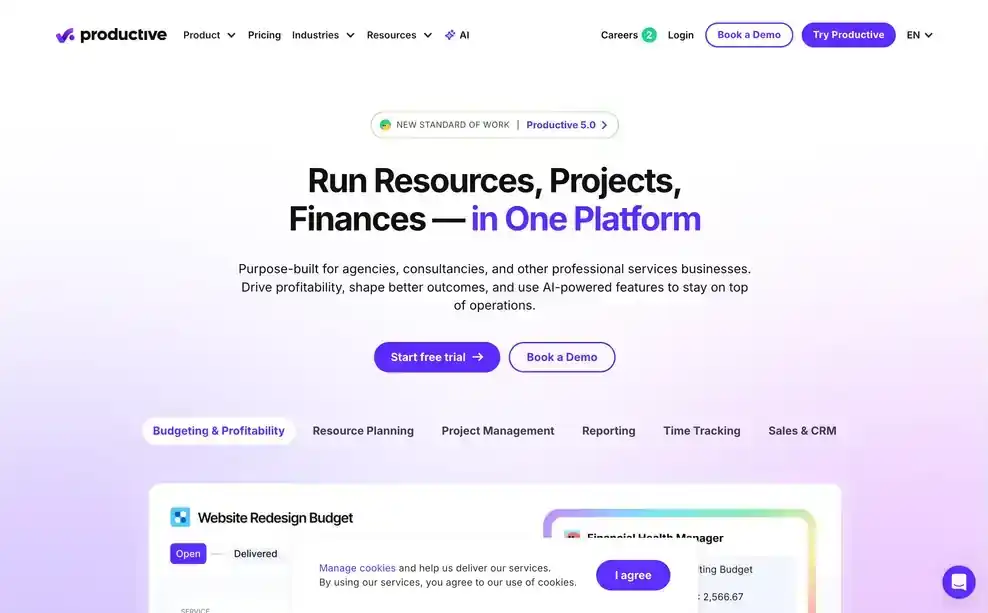
Productive keeps the path from a logged hour to an invoice short, which suits a smaller digital agency where an account lead, not a dedicated finance team, is often the one sending the bill. Scheduling accounts for booked time off automatically, so a sprint plan doesn't silently assume a developer is available when they're on leave.
Pros
Cons
Pricing: from $10 per user per month. See Productive vs Pike.
Best for: proposal-heavy digital agencies that want a quote to carry straight into delivery and billing without re-entry.

Accelo runs the full cycle from proposal to invoice in one workflow, which fits a digital agency pitching new project work and retainer renewals constantly. Its retainer handling stands out too: usage against an included monthly allowance, automatic overage billing, and renewal invoicing all happen inside the platform.
Pros
Cons
Pricing: Accelo does not publish pricing. Contact its sales team for a quote. See Accelo vs Pike.
Best for: digital agencies that want clients to see build or campaign progress directly, without a status call to explain it.
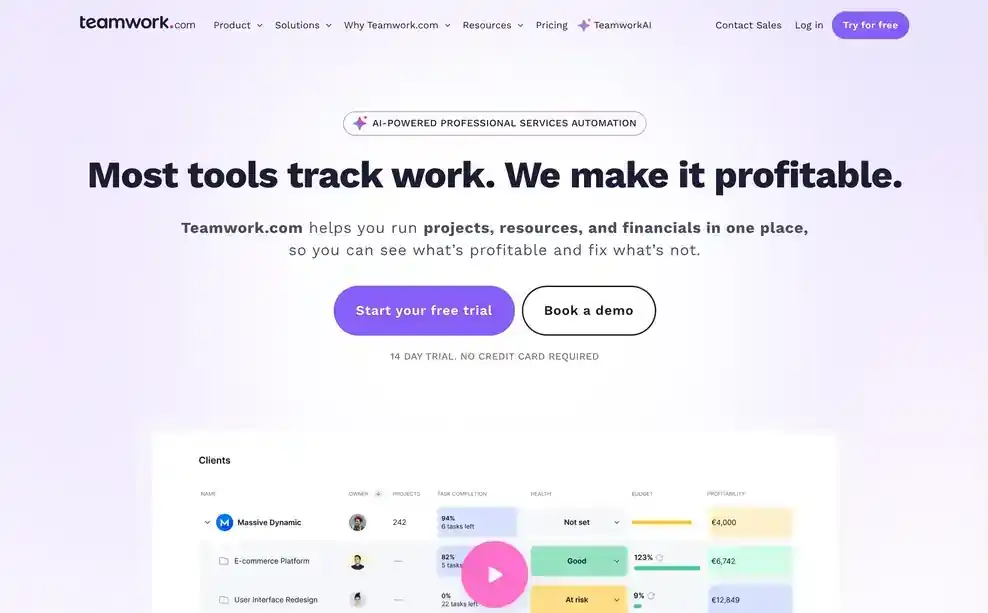
Teamwork's client-facing project portal fits a digital agency delivering a website or app build where the client wants to check progress themselves. More than 150 integrations connect Teamwork to the rest of an agency's stack, which matters when dev tickets, design files, and campaign reporting all live in different tools already.
Pros
Cons
Pricing: Contact Teamwork for pricing that includes the client portal features. See Teamwork vs Pike.
Best for: digital agencies running the same kind of implementation or launch project repeatedly for enterprise clients.

Rocketlane's AI reads a signed statement of work and drafts a staffed kickoff plan and billing baseline directly from it, which suits an agency running the same website migration or platform implementation motion repeatedly and wanting it set up the same way every time.
Pros
Cons
Pricing: from $69 per user per month.
Best for: finance-first digital agencies that want utilization and invoicing built on real per-discipline cost rates.
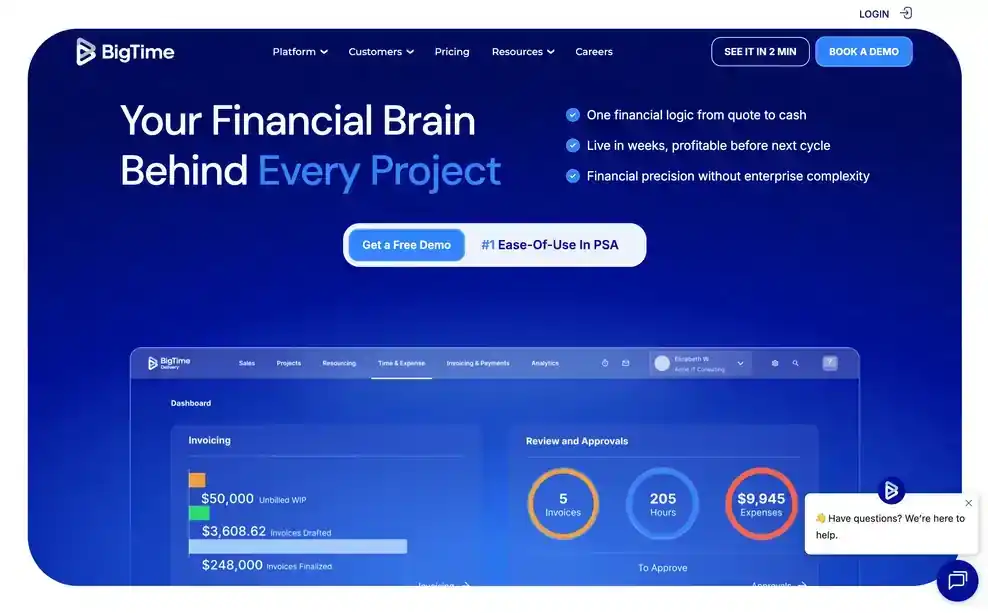
BigTime's time entries carry each person's real cost rate, so a project mixing developer, designer, and strategist time shows margin that reflects who actually did the work rather than a blended average. Scenario planning lets a firm test a staffing plan against existing workload before committing to it.
Pros
Cons
Pricing: BigTime starts at $20 per person per month. Confirm which tier includes scenario planning.
Best for: digital agencies that need dev and design task tracking and will run billing and margin through a separate tool.
Asana's timeline and workload views work well for tracking a mix of dev tickets, design tasks, and campaign deliverables on one shared calendar, which is why so many digital teams land here first. It has no native billing, no per-discipline cost rates, and no margin reporting, so agencies pair it with a separate time and billing tool and reconcile the two by hand.
Pros
Cons
Pricing: plans with basic reporting start at $10.99 per person per month billed annually. See Asana vs Pike.
Digital agencies choose Pike because a developer's hours, a designer's hours, and a strategist's hours all land in the same margin number instead of three separate exports someone reconciles by hand. A project that mixes a fixed-fee build with a retainer add-on runs on one billing setup instead of two. Because time tracking and finance sit in the same system as project delivery, a project lead can see whether a build is still profitable while it's still running, not after the final invoice goes out. For the category this sits inside, see our PSA software guide.
See time across every discipline tied to project margin in one place. Book a 15-minute walkthrough.
We assessed each platform against the five areas above: per-discipline cost-rate accuracy, support for mixed billing models, cross-discipline resourcing, real-time project margin, and a proposal-to-delivery path, with a specific eye on fit for digital agencies mixing dev, design, and marketing work.
Public vendor pages supplied feature and pricing details. Where a vendor does not publish pricing, we marked it contact sales. Each tool's write-up names one real limitation, not just its strengths.
Share
 ISO 27001
 GDPR
GDPR SOC 2 Type II
Built to keep sensitive client data secure and private.